
Written by Me Pierre-Alexis Bombardier et Me Clément Lucas
In a previous legal news item, we discussed a decision rendered by the Court of Appeal which had allowed an appeal of a decision of the Court of Quebec that retained the personal liability of two directors, arguing, as a defence, that they had acted within the scope of their mandate and had not committed any fault distinct from that of the legal person of the Syndicate.
These are the same principles that the Court of Appeal once again applied in matters of co-ownership.
The Court of Appeal states that it is well established that the director is the mandatary of the legal person. Pursuant to article 321 C.C.Q., he must, ” in the performance of his duties, conform to the obligations imposed on him by law, the constituting act or the by-laws and he shall act within the limits of the powers conferred on him.”.
The personal liability of a director can only be retained in the event of a contravention of the duties imposed by law and if a prejudice is caused to the syndicate or the co-owners. The fault of the director must be distinct from that of the Syndicate. In order to be retained, it must be committed “in a personal capacity or outside of [his] usual duties as a director“.
Directors are personally liable in cases of dishonesty or bad faith. When they act within their mandate, they do so for the community of co-owners. Thus, one cannot seek the personal liability of the directors by accusing them of the same actions as the Syndicate. A distinct fault must be alleged.
This decision of the Court of Quebec rendered on January 11, 2023, regarding the division of small claims, parallels a judgment of the Commission d’accès à l’information du Québec (“Commission“) rendered in 2020 [1] in the same dispute.
At the time, we commented on said decision, which dealt with surveillance cameras in divided co-ownership and their impact on the privacy of co-owners. The Commission received a complaint from the applicant, Yacine Cherif, (“Mr. Cherif“) and conducted an investigation.
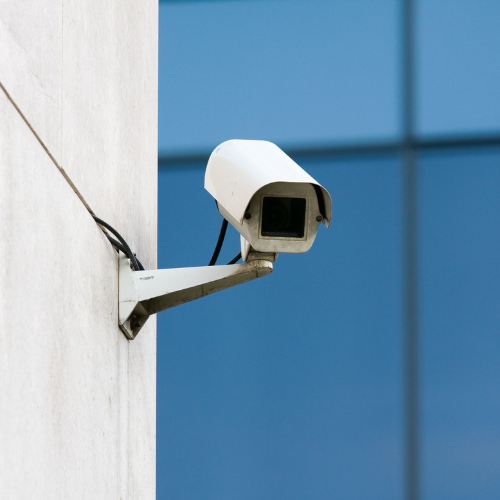
It was concluded that the surveillance cameras directed at the roof covering the pool, deck and urban chalet of the building administered by the Lowney 1 Homeowners’ Association (“Syndicate“) were “not in compliance with the provisions of the Privacy Act by continuously collecting the personal information of residents and their guests who are on the deck through a surveillance camera“. The Commission ordered the Syndicate to reposition the camera so that it was not continuously filming people on the terrace (only).
Not sparing any recourse against his Syndicate, Mr. Cherif had also filed a claim for moral and punitive damages alleging an intentional and illicit violation of his privacy. This is the subject of the present judgment. Mr. Cherif, after having smoked with his guests in the urban chalet of his co-ownership, receives a fine of $350 from the Syndicate. Following receipt of the penalty in question, he contests the fine received and accuses the Syndicate of having viewed, without right, the recordings of the surveillance cameras in order to find the offender(s) to the co-ownership By-law (cigarette butts having been found in the urban chalet).
In order to take a stance, the Court recalls that it was not bound by the decision made by the Commission. It considers that there is no expectation of privacy in a common area such as the urban chalet which is a public place (subject to the gaze of all co-owners and neighbors) as important as in a private area.
It emphasizes that the Syndicate, having the duty to ensure the conservation and security of the common portions (1039 C.c.Q.), is justified in viewing the recordings in order to ensure that the regulations are respected. “The Tribunal concludes that what the plaintiff qualified as an infringement against him is minimal and is justified in the context”. Consequently, the Tribunal, as a whole, rejects the claim of the plaintiff.
This decision calls into question the Commission’s assertion that a common area is an extension of a private area (thereby creating an expectation of privacy). What does this mean?
Without taking a position on the two above-mentioned judgments (and their particular circumstances), it seems to us that the common areas of a co-ownership are indeed an extension of the private units that constitute it. In the same way that an expectation of privacy exists for a homeowner enjoying the backyard of his or her house, the co-owner also expects to enjoy a certain privacy when he or she takes advantage of the facilities of the building outside of his or her unit, especially the common areas for his or her own restricted use. This privacy must, however, be subject to the limitations of co-ownership.
The particular modality of ownership constituted by divided co-ownership limits the traditional property rights of each divided owner. The rights of the divided owners must, in certain cases, give way to those of the community, represented by the Syndicate [2]. The purpose of the Syndicate includes taking out insurance coverage [3] and ensuring the protection of persons and property [4], particularly against the risk of fire.
According to its article 1, the Act respecting the protection of personal information in the private sector (“Private Sector Act“) is a declension of articles 35 to 40 C.C.Q. to private enterprises. Privacy may be infringed when authorized by law [5]. In this case, the Tribunal considered that this infringement was minimal and based on the very purpose of the Syndicate, as defined in article 1039 C.C.Q.
[1] Association des copropriétaires du Lowney II, 1016883-S, 19 octobre 2020 (Commission d’accès à l’information du Québec).
[3] Art. 1073 C.c.Q.
[4] Desfossés c. Syndicat des copropriétaires les Jardins du Havre, 2021 QCCQ 8550.
[5] Art. 35 C.c.Q.